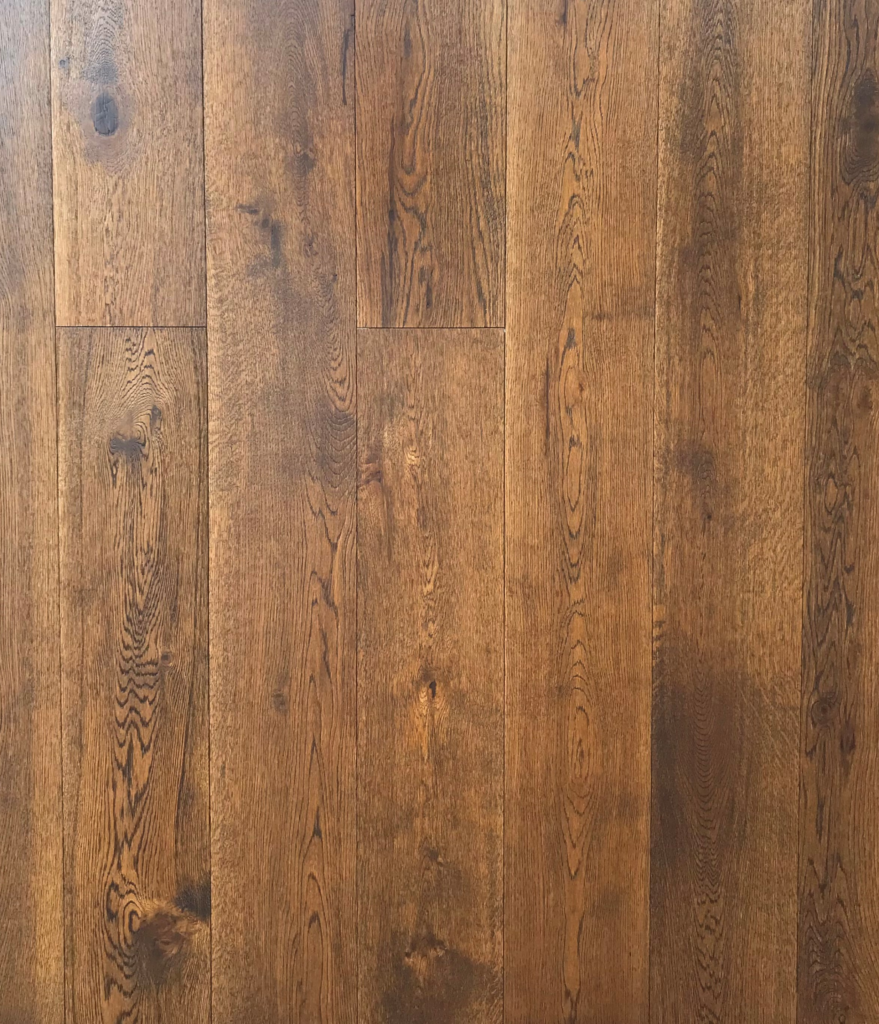
You want real hardwood in your home, but you’ve heard that solid wood can be finicky with humidity, tough to install in certain rooms, and expensive to boot. That’s where engineered hardwood enters the conversation. It delivers the authentic look and feel of natural wood with a smarter construction underneath, one that handles real life better than solid planks in many situations.
How Engineered Hardwood Is Constructed
Engineered hardwood is real wood flooring. The top layer, called the wear layer or veneer, is genuine hardwood, the same species you’d find in a traditional solid plank. The difference is what’s underneath.
Beneath the hardwood veneer sits a core made of multiple layers of plywood or high-density fiberboard (HDF), stacked in a cross-grain pattern. This layered construction is what gives engineered hardwood its dimensional stability. While a solid plank is one piece of wood that expands and contracts with changes in humidity and temperature, the cross-ply core in engineered hardwood counteracts that movement, keeping the plank flat and tight.
Most quality engineered hardwood uses between seven and nine plies. More layers generally mean more stability, though the quality of the core material matters just as much as the ply count.
Engineered Hardwood vs. Solid Hardwood
Both are genuine hardwood flooring. The distinction is in performance and flexibility.
Solid hardwood is milled from a single piece of wood, typically 3/4 inches thick. It can be refinished multiple times over its lifespan, and a well-maintained solid floor can last generations. However, it’s limited to above-grade installations, must be nailed to a wood subfloor, and is more susceptible to warping and gapping in humid or moisture-prone environments.
Engineered hardwood offers more installation versatility (it can be floated, glued, or nailed), handles moisture and humidity shifts more gracefully, works over concrete subfloors and in below-grade spaces like basements, and is compatible with radiant heating systems. It can typically be refinished once or twice depending on the wear layer thickness.
For homeowners who want hardwood in kitchens, basements, or open-concept spaces that span multiple subfloor types, engineered hardwood is often the more practical choice.
Engineered Hardwood vs. Luxury Vinyl
Luxury vinyl mimics the look of wood using a photographic image layer and delivers waterproof resistance, making it an excellent option for bathrooms, laundry rooms, and high-moisture areas. However, it’s a synthetic product.
Engineered hardwood gives you real wood underfoot, with its natural grain variations, warmth, and texture. It’s water-resistant but not waterproof, so it performs best in spaces where standing water isn’t a regular concern. If authenticity and the tactile quality of genuine wood are priorities, engineered hardwood is the clear choice. If waterproof performance is non-negotiable, luxury vinyl may be the better fit.
Maintenance and Care
Engineered hardwood is low-maintenance compared to many flooring types. According to the National Wood Flooring Association (NWFA), maintaining consistent indoor humidity between 35% and 55% is one of the most important steps in preserving any wood floor’s appearance and structural integrity.*
- A consistent routine keeps engineered hardwood looking its best for years:
- Use felt pads under furniture legs to prevent denting and scratching
- Sweep or vacuum regularly with a soft-bristle attachment to prevent debris from scratching the surface
- Clean up spills promptly to avoid moisture sitting on the wood
- Use a manufacturer-approved hardwood floor cleaner for periodic deeper cleaning
- Avoid steam mops and excessive water, which can damage the finish and penetrate seams
FAQs
It depends on the wear layer thickness. Floors with a veneer of 3mm or more can typically be lightly sanded and refinished once or twice. Thinner wear layers are not candidates for refinishing but can still perform well for 15 to 20 years.
Yes. The cross-ply core allows engineered hardwood to expand and contract minimally with temperature changes, making it compatible with radiant heat systems. Always verify the manufacturer’s specifications before installation.
Harder species like hickory and oak resist scratches and dents from pet claws better than softer woods. A durable factory-applied finish adds another layer of protection.
For households with large or active pets, choosing a species with a higher Janka rating helps maintain the floor’s appearance over time.
Explore Landmark Interiors Engineered Hardwood
Landmark Interiors’ engineered hardwood collections are built on more than a century of flooring expertise through Fishman Flooring Solutions. From rich, warm stains to modern light tones, our options span a range of species, widths, and finishes designed to suit any interior style.
Ready to see how engineered hardwood looks in your space? Find an authorized retailer near you.
*Source: National Wood Flooring Association (NWFA)
* Because every home is different, it’s best to consult us or a trusted general contractor to determine the most appropriate repair method for your situation.